

Internal Landscape of the Type One
Deep Wound/Relapse Pattern of the Type One: fears that he is bad, defective, and unredeemable. Feels his body, his impulses and feelings must be suppressed and controlled to avoid making mistakes.
Deep Wish: to feel his innate goodness and what is fundamentally right and sacred about him and the world. Wants to serve and improve the world for everyone. Want to be fair, reasonable, kind, and truthful.
Sees himself—as someone who is reasonable, principled, impartial, fair, truthful and reasonable, and inspired to improve himself and the world.
At Level 4 and below, he falls prey to his emotional habit of resentment, in which he sees what is wrong with self/others and needs improvement, while losing contact with what is essentially right and okay with most everything. He begins to feel obligated to fix what he sees as wrong. Add to this his mental habit of habitually judging self, others, and reality as imperfect, which intensifies his resentment.
He is driven by his Inner Critic Message: “I’m good or okay (and lovable) if I don’t make mistakes and follow my ideals without error. Mistakes are not permitted, ever! And, if I see something wrong, I am responsible for fixing it.”
At his best he is endowed with common sense, the capacity to see both sides of an issue, the capacity to give up his personal needs for the service of the community. He tells the truth, and lives by a standard of integrity that he expects himself to follow. He is merciful towards the flaws in others, and sees that everyone is doing their best, including himself.
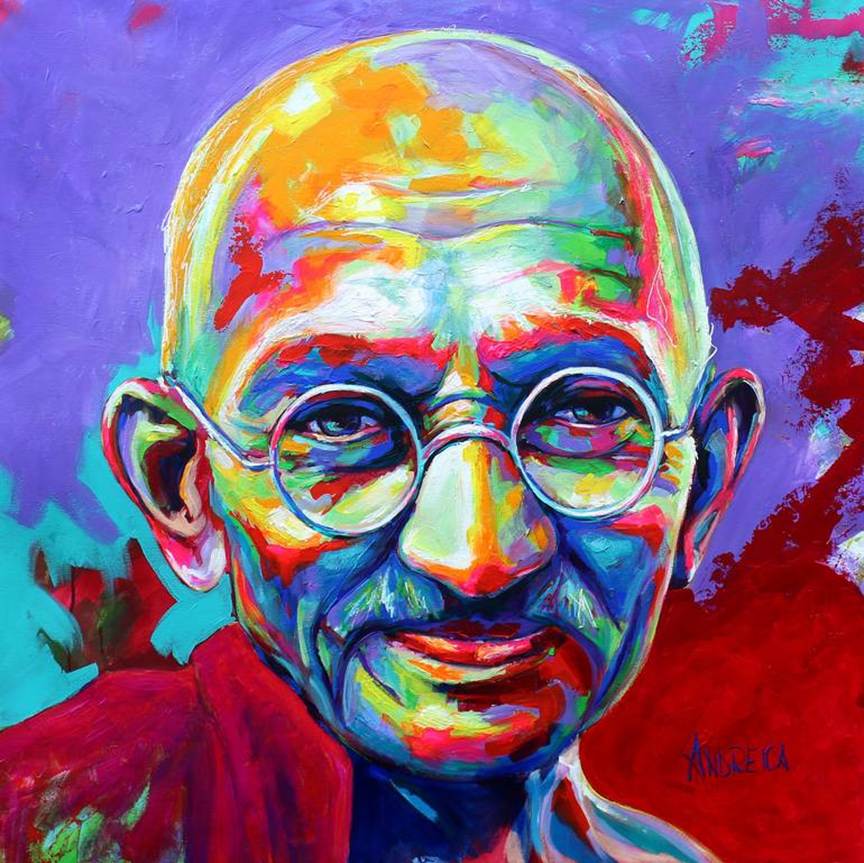
Type One in Recovery
The Reformer: The Rational, Idealistic Type
“Be the Change you Wish to See in the World” – Gandhi
The Healthy One
John, a healthy Type One, is a pure delight. Lighthearted, kind, reasonable, fair, wise, discerning, and self-effacing, he can laugh at his tendencies to be a perfectionist and to take himself too seriously. At his best, he exudes kindness and a tender, earnest heart filled with real mercy for the suffering of others. He knows, feels, and sees how hard people struggle to be good, to do the right thing. Although he has an eye on what he could improve in you, he holds what he sees softly and gently. He exudes gentleness, mercy, and patience, and is lightly constricted by the hauntings of his Inner Critic. He has done the emotional work to heal many of the sufferings that have caused him to heft his Type One shield to defend against the insults his Inner Critic is wired to deliver. This emotional healing has allowed for relaxation in his body, his heart, and in activating a quiet mind. Still, he’s needed to do much grief work to free himself of his less than healthy, defensive, Type One patterns. The inherited Type One core belief of “I am evil and condemnable” has had many layers of suffering and misunderstanding needing excavation, most especially living with a dad who was emotionally violent and critical of him, and a mom who disappeared when he was just a kid. Slow and steady work has allowed his merciful and serene heart to come forward and occupy its rightful place. To the extent his heart has been healed, to that extent his defensive, judgment patterns are disarmed. He walks lighter in his own skin.
John is generously concerned about your well-being. He’s able to look at things objectively, and lives by a code of honesty and integrity. He will do right by you. A shining light of truth, purpose, and hard work, if you need help he will deliver it with excellence and precision. He is a connoisseur of rich and practical help. Want solid advice on how to do something well, he’s the “go to” person. In touch with his basic goodness, he has no need to improve or fix you according to his standards. At his best, he is called to find effective ways to serve others and improve their quality of life without criticism or self-righteousness. Honest, fair, and dedicated to a high standard of integrity, he can be counted on to take impeccable, responsible, skillful action.
His journey in recovery has not been an easy one. Under stress, he notices that he loses contact with his graciousness and goes into work mode, trying to make himself and other people do things “right.” Then he stiffens and becomes intrusive with his ideals, and others feel the pinch of his criticism. This gets really activated when his Type Four son, a sixteen-year-old deeply aware that he is not following anyone’s expectations, rebels against his dad’s Type One standards. In order to be true to himself, he violates his dad’s code of right behavior, and then John comes temporarily unhinged, his gut suddenly a fist, his anger-management, judgement-management, don’t react to my son, wish vanishing in the haze of his reaction. Here comes a no-good, really bad, let’s-move-to-Australia-day. And before he can blink, he’s trying to “right” his son by pointing out his disrespectful, lazy, irresponsible actions, guilting him into being “good.” Of course, his son simply smirks and non-verbally lands a hammer blow of “You are not the boss of me.” In eloquent Type Four style, he reminds his dad, “Lighten up. Why is everything so serious with you,” and walks off, untouched by John’s passion, which fires him up even more. Then, his Inner Critic whispers, “You suck as a dad!” And guilt swallows him, followed by the wish to counterattack and try even harder to teach his son thru intensified messages of “You are disrespectful.” Guilt becomes his weapon of choice.
Although the healthy One’s perfectionism is usually more quietly expressed today, internally he notices that he is often under the microscope of his tireless Inner Critic, who sees flaws everywhere and goads him to improve and make things better. The good news is he is healthy enough to see his Inner Critic when it intrudes and isn’t as easily hypnotized. Except when his son presses his nuke button implying that John is a failure as a dad. When healthy, he can laugh about this, and not become so strident that his body constricts and hardens into a vice grip. An important wake-up call in his recovery is noticing when he is gripping the steering wheel of “what should be improved” and feels the heavy weight of obligation driving him to fix everything and everyone that needs improvement of some kind, including himself. Today, because of his work to become present and aware, he can more often see when his personality habits are taking over, and with the support of others, he can come back into a state of presence and awareness. Able to apologize when he has criticized and judged others, amends come easier. As he’s become less critical of self and others, his capacity to relax and engage life with grace and humor has grown, and his belief that he is responsible for fixing everything has softened. He notices his level of health on a given day by his capacity to be in touch with his sense of humor, his internal calm, his grace in cutting himself and others slack, and his capacity to see what’s good in the world. No one to improve today.
But there is another side to John, equally as important, the warrior of truth. In the territory of ethics and right treatment of human beings, he can and does take a life-and-death stance. Dishonesty hits his viscera like a Mack truck, gripping him from the inside out. This was reflected when, as a leading clinician at Mercy House rehab, he discovered and witnessed the CEO of the organization fall prey to alcoholism accompanied by a whole host of harmful behaviors. Lost in the haze of his addiction, he became aggressively insulting to clients and staff in bully episodes. This put Mercy House and its mission of caring for the addicted vulnerable in jeopardy. The atmosphere of compassion was replaced by an atmosphere of fear and defensiveness. The misalignment of the CEO’s behaviors with the mission of the treatment center—to live by a code of honesty, transparency, compassion, fairness, and democracy—sent a deep shock into the core of this Type One. He could not resist the call to what felt like his duty and reason for existence—telling the truth. He must speak out. Nothing to negotiate here. In his heart of hearts, he felt that the CEO would want help, would want to see the trouble he was in, would never wish to express the negativity that was eating up the heart and soul of the counseling staff and the clients they served.
With the profound and near-childlike earnestness and faith—I cannot tell a lie, and I’m certain you can’t either—and with the grounded humility and straight-up honesty of the Type One, John took healthy, Type One action. He spoke his truth, plainly. He uncovered the elephant in the room. He spoke with kindness, conviction, mercy, love, and a profound sense of right. He took a risk that denial, even retribution, might be the comeback.
John courageously said, “I can see your alcoholism has progressed. You are doing things that are hurting everyone and yourself. Please let me get you some help. There are resources to support you.” John discovered how an escape hatch opened that virtually everyone (other counselors) he assumed was an ally fled through, chanting sweet-sounding, spiritual rationalizations as they vanished. Fellow counselors—gone. Taken by their personal fear of losing their jobs, they escaped the scene. And as the healthy One does, he stood alone.
He was fired. Click, bang, gone. And then faced a slew of punitive actions from his boss. Checks owed him were not forthcoming; his boss started a rumor accusing him of theft, which was never proven, and other dishonorable actions. John, in his allegiance to his values, could clearly see that the CEO had been blinded by his addiction. He felt the CEO’s innocence while holding fiercely to the truth of the situation. The Type One at their best.
Type One in Addiction—Life at Levels 6 & 7
At L6 and L7, the addicted Type One expresses the “opposite” of his healthy qualities. He is aggressive and undermines individuals with his opinions and principles, either silently or openly, in the name of serving and improving them. Chewing on the heart-hardening substance of resentment and blinded by a narrow view of reality and how he and others should engage with it, he loses contact with his balanced wisdom and fairness. Driven to attack and criticize those who offend his standards (including him/herself), he has fallen far from being an exemplar of reasonable, patient and well-thought-out principles.
Take Billy, a man deeply affected by his father’s alcoholism, who has what is called untreated adult-children-of-alcoholism. That is, Billy grew up with a virulent, alcoholic dad, and in turn, got addicted to substances and addicted to his dad’s rage. In essence, he inherited his father’s patterns. Always angry, he could come up with very good reasons for indulging this anger and his drinking, all driven by horrific, unowned emotional suffering. A Type One, his path as a parent has been harrowing. Raging over the slightest error of execution by his children, perhaps leaving an unwashed cup in the sink, or leaving a shirt on the floor, he has gone nose to nose with them. Berating them non-stop in thirty- to forty-five-minute tirades, barely taking a breath between sentences, pummeling them with reprimand, he has engraved in their souls the message that they are horrid children. He has infused them with gargantuan guilt over minuscule actions while passing on the emotional atmosphere he grew up in and was strangled in. At his worst, he has reverted to physical abuse, grabbing them by the arm and spanking them to their room. Add alcohol to this, and you awaken a dragon wherein all the emotional abuse Billy received as a kid becomes a crazy, misguided, perfection incinerating the souls of his children. He will break the will of the kids, undermining their self-confidence and setting them up for homelessness and addiction. If he is lucky enough to achieve recovery, at some point he may understand that he has deeply wounded his children. (This is not always certain. Some are unable to do this due to the destruction of their memory for past events. Watch Thanks for Sharing, which captures this dynamic. The dad in the movie is a leader at AA, but comes home and expects his son, whom he has deeply hurt, to do follow suit. Not until the dad finally begins to listen to his son, does he realize the damage he has caused.)
If his heart one day breaks open and he feels deep remorse for his past behavior, he will reach out to make amends, apologizing to his children from the core of his being. This will be the most difficult work. They will instinctively turn away from him, fearful of more hurt. Reconciliation will take time. It is his work. Often this injunction is suggested: give family members at least a year before you attempt to reconcile. Get sobriety under your belt. And then, be patient. This process often takes several years, and sometimes just doesn’t work. The wounding one has caused may be too much to reconcile.
In the grip of his suffering, his Type One’s principles become weapons that discourage and dishearten the efforts of others. Instead of shining a light of heartfelt, well-reasoned wisdom onto matters of concern—his natural capacity when he is healthy—he rivets his children and wife with resentment-filled judgments. Often compelled to bring attention to what is wrong with people, places, and things, he fails to see what is good, correct, and in order. Overwhelmed by his sense of defectiveness at Levels 6 and 7 and doing all he can to numb it, he delivers a message that others are evil, defective, and irredeemable. (This is an example of ‘The Leadon Rule’ from The Wisdom of the Enneagram, by Riso & Hudson: Do unto others what you fear being done to you. The One, fearing that he is bad and irredeemable, makes others feel this way.) Instead of a graceful and balanced delivery of logical intelligence. His alcoholism exacerbates this.
Filled with self-hatred, he attempts to restore his well-being and integrity by trying to be good, trying to reform himself and his environment by “making” people (and himself) do things according to his ideals. And drinking to soothe his aching soul. When he arrives in addiction recovery, he has violated the vast majority of his principles, has harmed deeply those he wishes to love, has often fallen sway to the chaotic impulses of his body and passion, and is riddled with shame and self-condemnation. His deepest fear has come true: he is defective, bad, and condemnable. He is the failure he feared he might be, and seriously questions whether he is redeemable. His innate capacity to be a force of change, service, and reasonableness has vanished into the  distortions of his addiction. Instead of being modest and balanced, he has fallen prey to self-indulgence and his impulsive feelings and desires—all the while asserting the rightness of his position. He is in hell. He is simultaneously blind to his actions. Everyone else sees him with 20-20 vision. Quite a predicament.
The First Twelve Weeks for the Type One in Treatment
The newly sober and clean Type One arrives at a men’s treatment facility filled with tortuous and overbearing self-condemnation. (Well, he condemns you, too. Don’t take it personally!) He has an Inner Critic that greets him with a ranting film clip of all his errors. Defensive, he begins casting aspersions on those who have failed him, including God, the liberals, the conservatives, the government, his spouse, humanity, you name it!
Addiction has forced his hand, stripped him of everything, and cornered him in a residential treatment facility. Horrified, he is realizing that his opinion-driven life has not worked and he must turn to others to guide him from the darkness. His innate gift to the groups he participates in is his bone-chilling honesty. On good days, he will tell you exactly what he sees and is unconcerned who sides with him. If he believes someone is not being honest or not living up to their commitment to recovery, he calls it as he sees it, direct and true. At his best, he can cut through his rationalizations and delusions and take an unsparing look at his failures with shuddering precision. (You could call this ‘withering honesty.’) His downside is a tendency to see his errors with so much harshness and judgment such that he nearly crushes his spirit to dust (or the spirits of those in group). He is in desperate need of forgiveness and the ability to see his flaws with a kind, merciful heart. He approaches everything in a stringent and logical fashion, rigidity his only hold on power or control. His direction of growth, to Type 7, lives in a universe far, far away.
In vulnerable moments, he can assess the weaknesses of others and strike with cold logic. And yet doubt rails inside him: “Maybe I don’t really know what I’m doing. Maybe I’m as lost as they are.” The truth is hard to swallow: He is one of these men that he so harshly criticizes. He is just like them, imperfect, in trouble, humiliated, and addicted. Humility and mercy are the doors he must pass through. He, too, “deserves” and “needs” help, and truckloads of mercy.
Protective Mechanism of the One in Early Recovery—You Can’t See My Flaws
Afraid that his flaws will be seen, that he will be condemned as other than perfect, the One constructs a tough boundary of protection fortified by his strident criticisms and right opinions. He arrives in early recovery well-defended and quick on the draw, compelled to assert his judgments and opinions as if protecting his very life. His inflexible opinions have become the replacement for losing touch with what is good within him, and a buffer for avoiding the suffering his addiction has caused. Unconsciously the One is saying “You will not get close enough to see my imperfections and failures. You will not have access to that part of me that feels I’m condemned and unforgivable! In fact, I don’t let myself in that close; it’s too unbearable. If I allow you to get close, you could touch my heartbreaking disappointment with myself. I cannot bear this!”
The newly sober One can barely sit still in groups and is anxious to take concrete actions that can quickly clean up whatever “external” messes he sees in his life. He is a man of action! Looking internally into his heart is uncharted territory. As he impatiently sits in treatment, memories of his errors flood him. In response, he is quick to notice who doesn’t follow the rules and feels an overwhelming obligation to bring all of this to the attention of staff…and the guilty clients. He points out the imperfections he sees in fellow clients and counselors with anger and condescension, while his judging mind screams, “What is wrong with these guys? They have no commitment to working hard on their recovery.” Many times, the Type One at Mercy House becomes the renowned “Cleaning Nazi.” Never has Mercy House been so clean under the scrutiny and passion of the One to rid the house of all dirt and disorder. Never mind that several weeks earlier he sat in his own apartment, dishes stacked to the ceiling, ants having formed a food-line to and from the dishes to the left-open refrigerator door, his clothes unwashed and crumpled on the floor, bed, couch, for weeks! Mired in “blackout hell” and “alcohol fog” for years with little ability to commit to anything but drinking or drugging, this reality has faded into drunken amnesia.
I say to Paul, sober seven days, “Paul, are you aware of how passionate you are to bring order and chaos to Serenity House, the clients, to myself and staff, when for the past years you’ve lived in crack-house-style disorder?” He looks back at me, a sudden alertness in his eyes, pauses, grins sheepishly, and says, “Yes, that’s true. But that doesn’t matter because I’m back!” We both laugh.
In working with the One remember this: to whatever extent he is criticizing you, the clients, the world, he is applying this to himself. When you are being eviscerated, this is very hard to remember! This behavior keeps away those who might actually help him heal his sorrow, self-judgment, and disappointment. Besides, he’s wired to be responsible for himself, independent, self-reliant. He girds himself with a boundary of “I’m right and you aren’t, so don’t mess with me.” Held hostage by his opinions, he makes others feel unredeemable and condemnable. Squeezed into a knot of certainty by his standards, he experiences a false sense of independence and capacity. What drives all of this is his self-rejection of his imperfect humanness. Core Relapse Pattern: I am Bad and Unredeemable
The One habitually compares himself to an idealistic standard of right and wrong, good or bad, which he strives to achieve (no matter how long he’s been clean and sober). He is straddled with an illusion at the lower average levels of health (Levels 5-7) that his standards should be followed by everyone, and he feels obligated to enforce them. He feels good when he meets his standards, and badly when he doesn’t. When he enters addiction treatment, the standards he’s established for himself and others have become stringent and harsh, with little room for error. Paradoxically, he has violated his very standards and fallen into rebellious, self-indulgent, addictive behaviors (sometimes heading to point 4 and acting like a chaotic, reactive Type Four), which he has great difficulty recognizing and acknowledging. Since his errors are unacceptable, he often projects his flaws onto others. Wrapped in a psychological iron coat of self-control designed to avoid errant impulses, his heart and mind can barely breathe. The driving force—and a key relapse trigger for the One—is his core fearof being bad, corrupt and condemnable. He fears that his body, feelings, and impulses could cause him to make unforgivable mistakes, unless he strictly controls himself. John explains his struggle with feeling he is condemnable:
 “When I came into addiction treatment mostly I felt rage and self-hatred. How can I ever forgive myself for my errors? Men said, you’ve got to forgive yourself. This would take me a long time to digest and understand. Sometimes men would attempt to be kind and merciful to me, and I’d reject them as being too soft and too lenient. I was initially drawn to men in recovery who were hard on me and were punitive. I had to learn that I wasn’t weak for accepting compassion.”
John explains his self-judgment this way:
“I imagined that everyone was judging me the way I judged myself! I believed that the only thing that would fix me was punishment. If I see an error, I felt I needed punishment. It took me considerable time to notice when I was under the spell of ‘I am a bad person’ and my habit of punishing myself by screaming in my head: ‘You are a loser. You idiot. What’s wrong with you!’ totally hating on myself. Since I was so uptight, no one wanted to spend time with me. As my kids said, “You are a downer! Lighten up, Dad!” I thought that receiving mercy would let me off the hook.”
He took ‘pride’ in how hard he was on himself. A strange form of vanity developed in which he said to himself, “I am good because I do not let myself off the hook. I’m proud I treat myself harshly, that I can endure this, and inflict this upon myself. Mercy is for irresponsible people.”
Terrence experienced his Oneness in another manner:
“Throughout my whole drinking life I believed that everyone else was perfect and I was flawed. I was afraid to try anything new or challenging; afraid I’d fail or make a mistake. My escalating drinking fed into the fantasy that I had much to hide and that I was definitely flawed. I became intolerant of self—relentlessly pushing myself to do more and more to meet a self-imposed bar of success. I thought, ‘Everything will be OK if I just do www…today.’ I didn’t realize until I began sitting in a lot of AA rooms that people are just as flawed and imperfect as I am. That imperfect people are parents, doctors, lawyers, and pilots. That nobody plays by my strict and harsh rules, and nobody cares much for them. And that I’ve wasted the majority of my life tightly restricting my choices, options, and enjoyment of life. This has brought me tremendous humility and remorse.
Transformation in Recovery—Mercy
The One arrives in addiction recovery when the light of reality finally reaches him. Who he wanted to be, who he thought he was, he is not. Identified with the Type One self-image of “I am honest, fair, balanced, responsible, principled, accepting, and wise,” he experiences the wrenching awakening that he has lost contact with these qualities. He sees that his honesty has become a tool to punish others and himself. His passion to be fair has been turned to self-righteous superiority, and his principles of treating others with dignity has vanished in his condemnation of those who offend his ideals. Promoting “the truth,” he lied to himself and denied what was real, dissociated from the moments in which he indulged himself and his instincts, and blindly looked through his ever-shrinking, closed mind. He will feel great remorse and sorrow as he realizes the harm he has caused. He must learn to receive mercy if he is to withstand the withering assaults of his self-criticism. As my broadly smiling teacher would say, “Michael, if you punish yourself each time you discover a flaw, you reinforce the flaw so that it becomes more unconscious and powerful. I suggest you try mercy.”
Suggestions for the Type One
1. Begin to mistrust the certainty of your opinions and judgments. You easily believe that your perspective is the truth (whether it’s about yourself or others). Your task it to begin to mistrust or question the certainty of your opinion, and to hold it with lightness (meaning don’t take yourself so darn seriously). This means putting your judging, “I-know-what-is-right” mind on hold long enough to allow the words of others to touch you, to reach you. Become teachable, open, and curious about the perspectives of others. Only in this way will you be able to receive help. Remember this, if you can: In the arena of addiction, your addiction is way smarter than you. It feeds on your ego and whispers, “You don’t need help. You’re smarter than these people. Your deeper fear: If people realize how imperfect you really are, that you are in need of true help, they will annihilate you with criticism. They won’t help you; they will judge you!” Not true.
2. Begin to sense the suffering your resentment and judging cause you. Notice that underneath the heavy hand of your judgment and resentment, if you slow down to sense it in your body, is a terrible sadness and heartache. It hurts you to be judging yourself and others and devours your potential for savoring and appreciating life. You must start to observe that you are hypnotized by the belief that self-judgment and judgment of others will lead you to satisfaction. Unconsciously you believe, “If I impose my standards on others (or on myself), I will feel better.” When you slow down your judging mind with meditation or awareness-activating practices, you can feel it in your heart—you want connection. Ponder this.
3. Let go of being right. You’ve unwittingly identified your self-worth this way: I’m being good if I’m correct and improve others or myself. Fact: Being right does not give you happiness or satisfaction. You don’t arrive at the experience of your true nature and your real goodness by willing your way through the door of your soul with right opinions. In fact, you make the door thicker and more difficult to budge. Relax this urge to prove you are right. Breathe. Soften. Allow room for others’ opinions. Allow yourself the right to not know what’s right. Drop the war. Remember, being right is the ledge off which you fall back into your addiction and recurring emotional suffering.
4. Observe how you tighten your body. Your body can become your observation tower if you learn to sense it. When judgment and resentment arrive, your body feels it and provides you with a red flag of awareness. Use this wake-up call to step back and notice the patterns of judgment and resentment that are creeping their way into the stream of your thoughts. Spot them before you become them!
5. Begin to see how resentment sets you up for rebellion against your standards, and for addiction relapse. When you’re blinded by the trance of resentment (you’re doing things correctly but others aren’t), nothing feels good. There is no real pleasure in your life. Well, the pleasure of negativity can feel good for a while. But remember: you drank and drugged to escape these patterns and the negativity they engendered within. You can only take so much self-abuse until your instincts rebel and your ever-watchful addiction starts sending you euphoric recall slides of moments when you felt good during substance abuse. The next thing you know, everything has gone wild in you. Suddenly you’ve joined forces with your repressed and condemned instinctive needs and are rebelling against your perfectionistic standards. Being “bad” and breaking your standards becomes the joy wave you ride into the familiar land of addiction hell. You must lighten up and nurture joy.
6. You must begin to resist the urge to improve others. By learning to quiet your mind through meditation, you begin to spot the ongoing “judging” of your mind. You will begin to sense in your body the feeling of obligation to improve, perfect, and take responsibility for the errors of others (you will sense your body tightening: jaw, gut). When the urge to offer unsolicited advice arrives, stop. You say an inner “no” to this habit. You simply sit and observe this inner show of impulses, body sensations, and thoughts. Easy does it; don’t act on the impulse to right someone’s behavior. You are not the judge of them.
7. Begin to trust joy, celebration, and your inspiration. All work and no play leads to relapse, so notice when you feel the compulsion to snuff out the joy of another because they have missed a detail you consider important, or when their joyfulness irritates you. Notice how something inside you scoffs at joy and resists it, tightens against it, is anti-joy, while hiding behind a cloak of, “I’m doing the right thing first. I’m being an adult.” You must begin to disidentify from your Inner Kill-Joy! Your Terminal Adult. You must notice how you take strange pride in denying yourself pleasure as a means of being “good.”
8. Practice Gratitude. Notice how your attention is drawn to what isn’t done correctly, what is disorganized, what doesn’t fit your perception of right, wrong, good, bad, such that you take little notice of what is truly good.
But there is much that is good surrounding you, and you must consciously make efforts to see the good. Start with the obvious. You have fingers that work, a brain filled with billions of cells that allow
you to think and speak, a heart that effortlessly pumps just the right amount of blood through your body. On and on. With a little effort, you’ll notice many miraculous things that occur each day. Read Joy on Demand by Tan and nurture the art of joyful appreciation.
9. Begin to sense your heart. In critical moments, your partner says: “I can’t tell what you’re feeling. What do you feel for me?” Take these observations seriously. Know then that you have become a cold-logic machine that has inadvertently cut you off from your heart and feelings. Observe when emotion arises and you “logic it” away—you stick it into some internal logical category, you define it, organize it, and snuff the life out of it for fear that you will lose the ability to navigate your life and keep order in your world. Your Inner Critic might say, “That’s childish to feel hurt or sad. Or joyful. Joy is wasteful and for the immature. You’re supposed to be a reasonable, a ‘serious’ adult, unaffected, responsible, joyless, following the rules.” Remember, you came here to abide in a joyful and loving heart.
10. Begin to recognize when you push yourself too hard. Pushing the limits to complete a task and turning yourself into a pretzel to accommodate the “shoulds” isn’t healthy. Sense when your body says, “I’m tired,” and listen to it. This will take time, and you will do well to ask your sponsor or support system to help you begin to identify when you are caught up in workaholism, or additive doing, feeling that rest in wasteful and lazy. Fact: Others can see when you are wound tight and striving too hard and way too seriously. Noticing when you are tensing and squeezing your body, holding your breath, tightening your jaw—that’s a key that you are caught in the Type One machine of striving.
11. Just say “No” to your habit of creating impossible, ever-unfolding to-do lists.” Ask your sponsor or support network to help you notice how you pile too much on your plate in the attempt to be good, or beyond the criticism of yourself, others. Ask them directly, “When do I expect too much from myself or others? Help me to identify the cues. What do you suggest I let go of?”
Parting Thoughts
Remember, the real you doesn’t need to be fixed or improved upon. It patiently waits for “presence” to arise, to help you realize that what you’ve been seeking is already here, in this moment. Simply put: you are not bad, irredeemable, or defective. Not by a long shot, and sobriety will teach you this, slowly but surely. In time, you will see the delightfulness of who you are, and as you relax, your sense of humor will arise. Your playful soul will have permission to be, and along with it innate and balanced wisdom will gracefully inform you when needed: right time, right place, effortless. Pretty great stuff!
And as you continue to unfold and embrace your deep goodness, awakening will further teach you that you are never, nor need be, able to judge anyone or anything objectively. You can drop this job and this habit and breathe a huge sigh of relief. Then reality will reveal its rich sacredness and fundamental goodness, of which you are a part of, and immersed in. And joy will become a friend to you!